
Last week, I was watching a YouTube compilation of 70s Blaxploitation clips with my parents. We were hollering—the action was so gloriously over-the-top, the fight scenes literally had the three of us laughing out loud. But something else came through the screen, something uncanny. Beneath the flair and the funk, these movies had a powerful gravity. As a Black woman, it just felt good to see stories filled with predominantly Black casts, even with all their theatricality.
That feeling, however, wasn’t universal. The genre was famously criticized by figures like Dr. Junius Griffin, who coined the term “Blaxploitation” to call out Hollywood for exploiting Black audiences. And while that critique has its place, it often overshadows the revolution these films sparked. And at the heart of that revolution was one man: John Shaft. While the genre as a whole opened doors, Shaft specifically changed the blueprint, proving a Black lead could be a complex, confident hero and a massive box office draw.
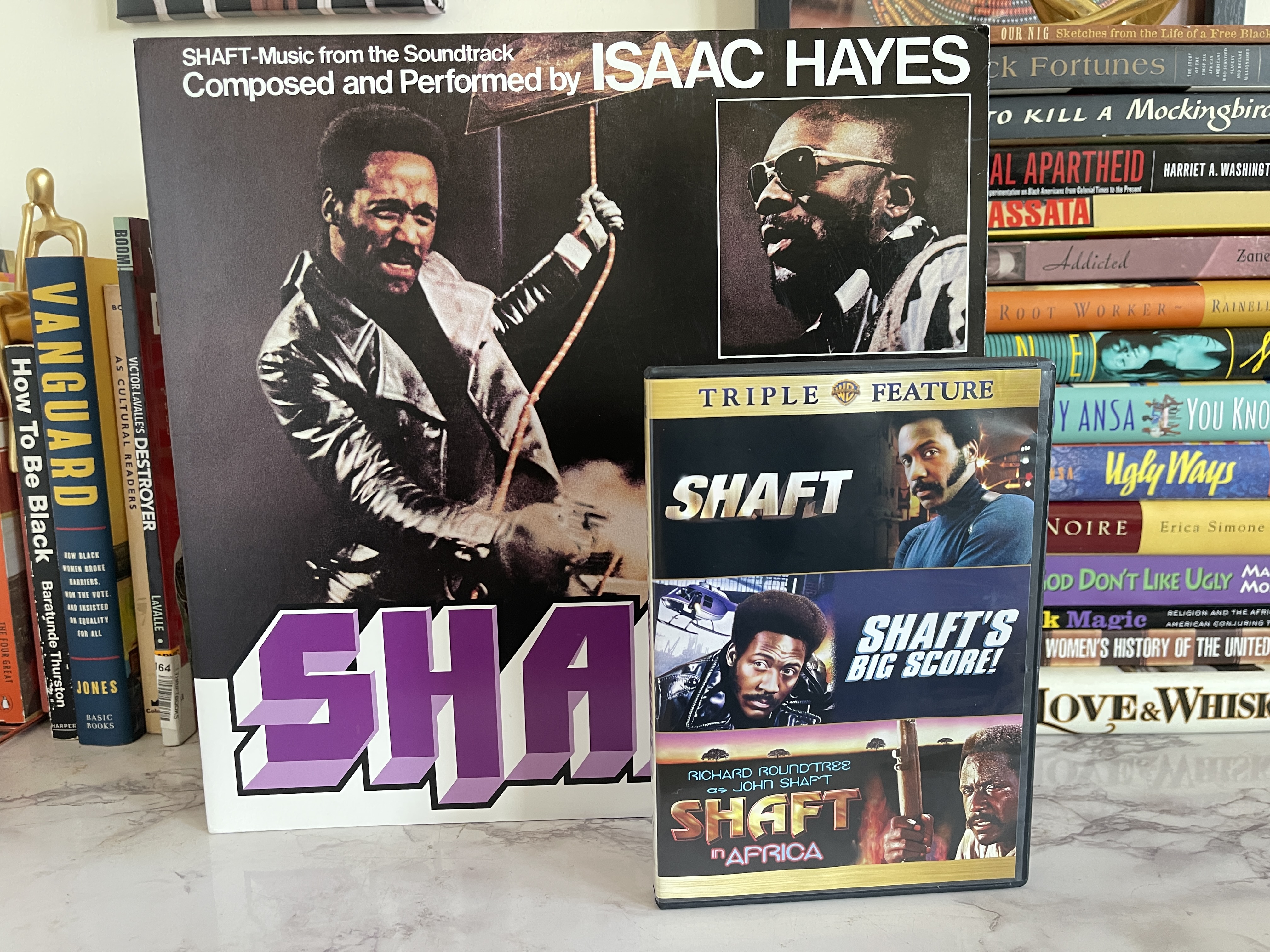
The sheer number of films, over 200 in the 70s alone, created a tidal wave of opportunity. It launched the careers of icons like Pam Grier, Fred Williamson, and Ron O’Neal. But it was Richard Roundtree in 1971’s Shaft who became the archetype. Directed by Gordon Parks and backed by Isaac Hayes’ legendary, Oscar-winning soundtrack, Shaft was a new kind of hero.
So, how did he change the trajectory? Shaft wasn’t a sidekick or a saint. He was a private eye, answerable to no one. He was handsome, fiercely confident, and moved through a gritty New York City with a swagger that was entirely his own. He wasn’t fighting for a grand cause; he was a skilled professional solving a crime, and in doing so, he commanded respect. He was, in his own way, a superhero long before it was commonplace.
The audience response was thunderous. Made on a lean budget of just over $1 million, Shaft grossed an astounding $12 million, sending a shockwave through Hollywood. Knowing how successful Shaft was, it always makes me chuckle with studios refuse to give Black movies big budgets. The demand was so immediate that two sequels, Shaft’s Big Score and Shaft in Africa, were rushed into production.
But his impact wasn’t confined to the 70s. The character’s legacy has spanned nearly 50 years, inspiring comic books and, most notably, a new film franchise led by Samuel L. Jackson, who shared the screen with the iconic Roundtree himself. This endurance is a testament to the character’s power.
So, while the debates about “Blaxploitation” are valid, the success of Shaft did something undeniable: it shattered the myth that Black actors couldn’t carry a film. It built a bridge. Because let’s be clear: before the vibranium of Black Panther and the vampire slaying of Blade, there was John Shaft, a different kind of superhero, walking his own path and forever changing the stereotype of Black lead actors.








Leave a Reply